News

Ciclo de Masterclasses: Relações entre humanos, animais e plantas

Inicia-se a 15 de outubro o ciclo de Masterclasses “Estudos sobre Animais e Plantas”, integrado na iniciativa NOVA PERSPETIVA | Ciclos de Masterclasses em Ciências Sociais e Humanas. Através de um conjunto de aulas conduzidas por docentes e investigadores/as da NOVA FCSH, esta edição propõe uma abordagem interdisciplinar às relações entre humanos, animais e plantas, explorando as suas dimensões históricas, culturais, éticas, científicas e ambientais. 

Concebido para dar a conhecer investigação recente desenvolvida na Faculdade, este ciclo pretende aproximar a academia da sociedade, promovendo o debate em torno de temas centrais da atualidade, como a sustentabilidade, a biodiversidade, o património ambiental e as relações interespécies.

Destinadas ao público em geral, as Masterclasses organizam-se em dois eixos temáticos – “Entre Espécies” e “Paisagens Vivas” – e decorrem em regime presencial, no Auditório 1 da Torre B, e em formato online. Cada eixo integra três sessões, cujas inscrições individuais podem ser efetuadas até à véspera da última sessão através da submissão de um requerimento na plataforma Inforestudante (seguindo o seguinte percurso na plataforma: Balcão Académico > Requerimentos > Adicionar > Pedido de Inscrição em Masterclasses Isoladas). 

Os temas e datas das aulas são os seguintes:

“Entre Espécies” – coordenação de Nina Vieira:

1.ª Masterclass: 15 de outubro, das 18h00 às 20h00

2.ª Masterclass: 22 de outubro, das 18h00 às 20h00

3.ª Masterclass: 29 de outubro, das 18h00 às 20h00

“Paisagens Vivas” – coordenação de Bárbara Direito

1.ª Masterclass: 5 de novembro, das 18h00 às 20h00

2.ª Masterclass: 12 de novembro, das 18h00 às 20h00

3.ª Masterclass: 19 de novembro, das 18h00 às 20h00

Read more...

7º Encontro REPORT(H)A - Toda a História é História Ambiental

7º Encontro REPORT(H)A - Toda a História é História Ambiental:
MARQUE NA AGENDA: dezembro 2027
 
O 7º Encontro da REPORT(H)A — Rede Portuguesa de História Ambiental será um espaço para pensar a história enquanto disciplina inerentemente ambiental. Questionando os pressupostos fundamentais das historiografias antropocêntricas, procurar-se-á explorar interdependências mais complexas que moldaram os processos históricos. À medida que os investigadores abordam o passado através de elementos,substâncias, fluxos físicos, plantas, animais, fungos, objetos, infraestruturas e outros não-humanos e mais-que-humanos, surgem novas categorias para pensar a causalidade, a agência, a responsabilidade e o poder. Reconhecendo o ambiente não apenas como um pano de fundo para a história, mas como um actor dinâmico, este encontro visa interrogar a própria disciplina da história nas suas definições, práticas e pedagogias.
A organização do encontro está a cargo do Instituto de História Contemporânea (IHC, NOVA FCSH e UEVORA, In2Past) e do Centro de Humanidades (CHAM, NOVA FCSH e UAc).
A chamada para contribuições está agendada para janeiro de 2027.
Read more...

Exposição Phytographia: Um herbário gravado na Sociedade Martins Sarmento

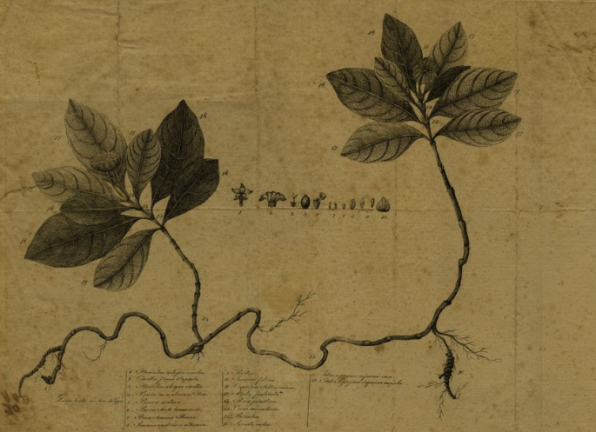
Estampas botânicas do século XIX estão no centro de “Phytographia. Um herbário gravado da Sociedade Martins Sarmento”, exposição que a SMS apresenta em Guimarães a partir deste sábado, 17 de outubro. A inauguração é às 17:00, na Galeria de Exposições da instituição.

A mostra propõe um diálogo entre a ciência botânica e a arte da gravura. O grande destaque é a série das Oficinas do Arco do Cego, em Lisboa, publicada originalmente na obra “Phytographia Lusitaniae selectior” (1800), de Félix de Avelar Brotero.

Além do acervo da Sociedade Martins Sarmento, a exposição inclui espólio cedido pelo Museu de História Natural e da Ciência da Universidade do Porto, pelo Museu do Centro Hospitalar do Porto (ULS de Santo António), pela Saber Fazer, pelos Serviços de Documentação e Cultura da Faculdade de Ciências da Universidade do Porto e pela Universidade dos Açores. No espaço expositivo, as gravuras surgem junto de exemplares de herbário e outros objetos.

A iniciativa decorre no âmbito de “Guimarães 2026 – Capital Verde Europeia”, a que a SMS se associou formalmente. A exposição fica patente até 28 de março de 2027, de terça-feira a domingo, das 10:00 às 12:30 e das 14:30 às 17:30.

Visitas guiadas à Exposição

7 de novembro - 10h30

5 de dezembro - 10h30

Read more...

CfP: Epistemologies of the Hinterland. The Making of Rural Knowledge in the 20th Century and beyond

Editors: Dietlind Hüchtker (University of Vienna), Friedrich Cain (University of Vienna) and Pavla Šimkóvá (Collegium Carolinum)

Deadline for Submissions: 15 November 2026


Call for Papers:
Epistemologies of the Hinterland. The Making of Rural Knowledge in the 20th Century and beyond

Today’s rural environments mirror long historical processes. Especially since the industrial revolution, they can be conceived as the outcome of social, administrative-technological, political, and scientific interventions in a taken-for-granted nature. In our publication project we aim to reconsider these interventions as epistemic complexes that defined rurality along several hierarchical divides that also carved out European modernity: civilization/nature; science/belief, the individual/community; urban/rural; system/habit; measurement/experience; rationality/emotion etc.

Focusing on examples from the area of rurality, we want to search for encounters between bodies of knowledge that have historically been perceived as incommensurable and look at the practices, subjects and objects of knowledge
production. We envision analyses of incommensurability narratives to open perspectives on developments since the early 20th century, but also on the most recent global climate debates and their often very local pinpoints as well as on recent political attempts to re-naturalize complex histories as national cultures.

We want to bring together case studies from different contexts of rurality that offer a new perspective on rural knowledge. At the centre of our attention is on the “how” of knowledge production in all its contradictions, perceived incommensurabilities and inherent power relations. We are focusing mainly on the 20th century, with some sojourns into the 21st century, and on Europe situated within its imperial, colonial, and global context, and the neo-national backlash of re-naturalizing complex histories as national cultures. The significance of science is a central, but not the only aspect.

We are seeking to publish the contributions as a special issue of an international peer-reviewed journal such as Knowledge or Science in Context. Topics can include but are not limited to:

  • researching rurality from different disciplinary perspectives
  • relations between the researchers and the researched
  • historicity of wilderness, nature, and rural spaces
  • knowledge production and gender
  • hygiene and eugenics in colonial contexts
  • knowledge production about precarious agricultural regions (mountains, tundra)
  • agricultural modernization
  • education in rural areas
  • environment, growth and the EU
  • global aspects of climate debates and their local contexts
  • media and knowledge dissemination

To ensure a concise and coherent publication, we will organize two meetings (online and
in person) to work on questions and concepts, drafts and pre-circulated papers. The
author workshop will take place in Vienna in June 2027.


Preliminary timetable:

15 November 2026: abstract submission deadline

December 2026: online meeting over concept of special issue

June 2027: in-person author workshop in Vienna

Please send your abstract of 500 words max. to dietlind.huechtker(at)univie.ac.at. The deadline for abstracts is the 15th November 2026.

Read more...

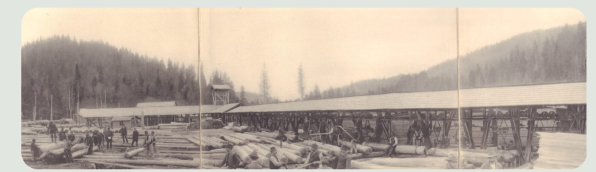
Call for Papers: A World of a Thousand Cuts. Forests, Wood, and Industrialisation Across the Globe in the 19th and 20th Centuries

Call for Papers: A World of a Thousand Cuts. Forests, Wood, and Industrialisation Across the Globe in the 19th and 20th Centuries

Organisers: ERC project “Industrial Wood: European Industrialisation as Seen from the Forests (1870–1914) (INWOOD)”

6 - 8 July 2027, University of Turin, Turin, Italy

Deadline for Submissions: 30 November 2026

Call for Papers:
A World of a Thousand Cuts. Forests, Wood, and Industrialisation Across the Globe in the 19th and 20th Centuries

The mainstream historiographies of industrialisation habitually emphasise the novel energy sources and materials that powered this transformative era, such as coal, steel, steam and electricity, implicitly assuming that wood, an important pre-industrial resource, was destined for an inevitable decline. Histories of industrialisation also disproportionately focus on Europe and North America. Stemming from the research vectors of the ERC Starting Grant “Industrial Wood: European Industrialisation as Seen from the Forests (1870-1914)”, this conference aims to rethink the relevance of wood in an unevenly industrialising world throughout the 19th and 20th centuries. It follows more recent interpretative paths, which draw attention to the material diversity of industrial metabolism, in order to achieve a more complex understanding of the social, economic and environmental histories of industrialisation. The conference also seeks to geographically decentre the research perspective and discover the links between forests and industrialisation in the global context.

Industrialisation, understood as a systemic social and economic transformation underpinned by technological innovations and leading to changes in production regimes, was an uneven and chronologically mis-aligned process within Europe and globally, stretching from the late 18th century far into the 20th century. Consequently, the relationship between industrialisation and forest exploitation varied depending on the national and international politics, markets, law regulations, access to technology, environmental movements, property and labour regimes, imperial dynamics and colonial power. Attentive to these complexities, the organisers have approached industrialisation as an a-synchronous, multi-focal and globally encompassing social and economic process, activated by a confluence of economic impetus and political agenda.

Even if in the course of industrialisation wood has been marginalised as a combustible, it maintained its significance in industrial economies as a construction material. Moreover, innovations in technology and transportation – both the drivers and the outcomes of industrialisation – made forests increasingly accessible for large-scale extraction, thus bringing industrial logging into the furthest reaches of the woods and fundamentally reshaping them economically, socially and ecologically. Recent historical, anthropological and archeological studies, focusing mostly on North America and Europe, show that extractivism, (im)migration and environmental degradation were a part of this process. They also reveal that industrialisation of timber production did not mean a complete break with rural economies, and that the demand for wood as fuel or production material (for paper or packaging, for example) changes depending on the historical moment. Through this conference, we aim to broaden the conversation geographically to include global histories of industrialisation and to answer these questions: how did industrialisation change the world’s forests? What kinds of new relationships, dependencies and hierarchies did the arrival of industrialisation within the forest context instigate with regards to natural environments and the working lives linked to their transformation? How does our understanding of industrialisation change when we cease to read it as a sequence of substitutions and instead view it as a process of persistence, accumulation and re-articulation, wherein old material and energy flows are not erased by new ones but are intricately woven into them, undergoing profound transformation? Ultimately, what does the industrialisation of forests mean? And how do we adjust our research methodologies to answer these questions?

The conference seeks to explore cases, with a double focus on forests and industrialisation, in various political contexts and across different geographies throughout the 19th and 20th centuries. The papers should relate to but do not have to be limited to the following themes:

  • industrialisation and wood consumption
  • labour, migration, gender and ethnicity
  • empires, colonialism and decolonisation
  • industrial wood uses, wood-based businesses and geographies of timber flow
  • networks, circulation of ideas and technology
  • industrial timberscapes (timber production complexes, workers settlements, infrastructure)
  • deindustrialisation and its impact on livelihoods
  • environmental effects of industrialisation in forests

Scholars in humanities and social sciences, interested in these topics, are welcome to apply. Ultimately, the conference aims to foster an interdisciplinary confluence between environmental history, social history, economic history, environmental anthropology and related sub-disciplines. We invite contributions from doctoral students, post-doctoral researchers and senior scholars.

ORGANISATION, SUBMISSION AND DEADLINES:
To apply for the conference, please submit a single PDF-file consisting of:

  • an abstract of the presentation with a title (max. 500 words)
  • name, institutional affiliation, and a list of relevant publications

The applications should be sent to This email address is being protected from spambots. You need JavaScript enabled to view it..

The organisers will cover meals, travel (economy-class flight or train) and accommodation expenses. The conference will be held in person.

Deadline for submissions: 30 November 2026.

The notifications about the participation in the conference will be sent by the end of January 2027.

Successful applicants will be asked to submit the drafts of their papers (6,000 words) by 15 June 2027.

The organisers plan to publish the papers as an edited volume or a special issue of a journal.

Organisers:
Giacomo Bonan, Kateryna Burkush, Vincenzo Colaprice, Csongor Jánosi, Claudio Lorenzini, Silvia Pizzirani

Read more...

CfP: 14th Biennial European Society for Environmental History (ESEH) Conference

Call for Papers- Environmental History Beyond Disciplinary Boundaries

The European Society for Environmental History (ESEH) is pleased to invite proposals for panel sessions, individual papers, book presentations, posters, roundtables, and more experimental presentation formats for its upcoming biennial conference. The conference theme – Environmental History Beyond Disciplinary Boundaries – aims to highlight and reinforce the interdisciplinary and transdisciplinary nature and culture of environmental history.

The Conference will be held in
Salzburg, Austria, from 7 to 10 September 2027.

It is organised by the ESEH and the University of Salzburg.

The deadline for submissions is 15 October 2026, 23:59 CET.

Notifications will be sent out in February 2027.

Conference Theme

Environmental history deals with the mutual interactions between humankind and the rest of nature in the past. It studies people and the rest of nature as intertwined. It includes material, cultural, intellectual and political aspects. Environmental history has been an interdisciplinary endeavour from its beginnings. The field developed in conversations between historians and scholars from other disciplines in humanities, social and natural sciences. In addition to its distinct interdisciplinary nature, environmental history is characterized by transdisciplinarity – research at the intersection of academia and non-academic actors. Environmental history has emerged in tandem with environmental movements and continues to place high value on science communication and public engagement. The strong inter- and transdisciplinary traditions make environmental history a unique field of research looking at the past and its relevance today.

The complexity of environmental history as an inter- and transdisciplinary field is, however, also a challenge. This is particularly true in times when academic debates face populist attacks and budget cuts disadvantage interdisciplinary endeavours as funding is to a certain degree ring-fenced in disciplinary silos. Against this background it is especially important to foster research practices that transcend such boundaries in order to raise the understanding of the complexities of the real world.

Following the conference theme, the call for papers is directed at participants from a wide range of disciplines as well as practitioners in the realm of interdisciplinary and transdisciplinary environmental history research, teaching, and outreach. It invites contributions dealing with socioecological formations over time (such as past environments as a result of coevolution between humans and the rest of nature; human attitude toward the rest of nature, etc.), and more-than-human approaches. The conference invites empirical and/or reflexive theoretical, methodological, or epistemological contributions, as well as those dealing with research ethics in environmental history.

Environmental history can be written by experts in humanities, natural, or social sciences but best results are often achieved by interdisciplinary or transdisciplinary teams. We encourage the organisers of panels, roundtables and ‘different world’ sessions (see below) that link more than one presentation to frame sessions in ways that bring multiple disciplines and diverse perspectives in dialogue. At the same time, authors are encouraged to think of possible co-authors to increase the inter- and/or transdisciplinary nature of their contributions. As for the ‘different world’ sessions, the conference particularly welcomes transdisciplinary workshops with non-academic participants, presentations focused on science outreach, knowledge co-production and teaching.

We will consider all historical periods, all geographical areas and all disciplines. To bolster diversity at the event and promote new forms of networking, we strongly encourage panels/interventions where the presenters come from different regions, generations, genders, different institutions or different disciplines. We also encourage demographic balance and the engagement of emergent scholars as facilitators or session chairs. Graduate students will be offered a special reduced fee.

Presentation Formats

Conventional presentation formats are indispensable and constitute much of the conference, but we also need new modes of conversation (see section ‘Different World’ Sessions). Therefore, we encourage submissions that introduce a productive conflict of views, interpretations, or methodologies:

Conventational Presentation Formats

We invite panel sessions, co-authored or single-authored individual papers, posters, book presentations, and roundtables. For all presentation formats include the author(s), affiliation(s), title, abstract, and keywords in your submission:

Panel Sessions

Sessions consist of 3 papers of 20 minutes each, 4 papers of 15 minutes each, or 3 papers of 15 minutes each plus a commentator/discussant. Session proposals include a session title and session abstract of 250 words; a list of contributors and the chair/organiser; and individual paper titles and abstracts of around 250 words each. All sessions should book enough time for a general discussion in the end.

Individual Papers

Individual papers can be co-authored or single-authored. In case of acceptance, the Program Committee will combine them into sessions of three to four papers. Paper proposals consist of the name(s) of the author(s), the presentation title and an abstract of 250 words. The authors of accepted individual papers will be notified by late spring 2027 whether their contributions can last for 15 or 20 min, depending on the number of papers in the respective session.

Book Presentations

We encourage authors to present their recent books. Authors are invited to choose a suitable format to present their book, focusing on methodologies and a selection of main results. The presentation will be followed by a discussion with the audience. Submit an abstract of 250 words that includes the book author, the full reference of the book and indicates how you plan to present it.

Posters

Poster proposals will include the name(s) of the author(s), the poster title and an abstract of 250 words. Poster sessions will be on-site only. There will be a designated display area, and a session for all poster authors to present their research in 5 minutes per poster. The Environment & History Poster Prize sponsored by The White Horse Press is awarded to the best poster (€ 100.– award) and the 2nd place poster (€ 50.– award).

Roundtables by Researchers

A 90-minute roundtable, consisting of panels ranging from 3–6 researchers and a chair who speak to a common question or theme. Successful roundtables involve interaction between the panellists, an active chair who shapes the conversation, and time for the audience to interact with the panel. Roundtable proposals consist of the title, an abstract of 250 words and list the names of the chair and panel members.

Roundtables are welcome to examine a wide range of topics, such as the role of environmental history research in relation to present and ongoing environmental crises, our own academic practices, activism, or unconventional contents.

Different World Sessions

In the spirit of rethinking the conventional, we welcome proposals for full sessions with creative formats, focused on environmental history research, writing, teaching, knowledge co-production or outreach. To submit a proposal for a different world session, please name the organiser(s) and colleagues involved, and provide a 250-word abstract (unless its length is specified otherwise below) that describes the activity and mentions any special logistics you might need (please be modest in this regard). Ideas include, but are not limited to:

Transdisciplinary Workshops

Chaired workshops involve environmental historian(s) and non-academic participants. Such a workshop can be a transdisciplinary roundtable discussion, a craftivist workshop presenting the work and goals behind, or any other kind of a transdisciplinary workshop you can think of within environmental history. Creativity in the workshop design will be cherished. Invite relevant non-academic participants, such as artists, farmers, politicians ...

Teaching Environmental History

Explain the tips and tricks of your success in environmental history classes to inspire others and be inspired by their comments. Proposals consist of the author, presentation title, and an abstract of 250 words.

Meet a Scientist

Researchers who submit contributions of this type will be approachable in informal settings (pubs etc.) during one evening. Your abstract targets the general public. In your 250-word abstract, (1) list 1 to 5 keywords that designate the topics you want to discuss, and (2) do your best to persuade the general public of the relevance of these topics.

Speakers Corner/Poetry Slam

In this rapid dissemination format, you have 5 minutes to represent your project idea/results or a research problem without digital tools. Proposals consist of the author, title, and an abstract of 100–200 words.

Small Exhibitions or Films

Small exhibitions/films presented by authors/film directors. All of them should deal with/are relevant for environmental-history outreach, show results of transdisciplinary knowledge co-production (e.g., collaborations with historical museums and film makers) or teaching, or present works of art relevant from the vantage point of environmental history. Proposals consist of the author(s)/production team, title of the exhibition/film, film duration/size of the exhibition, and a 250-word synopsis.

Skills Workshop

  • Teach others your skills (e.g. in sources interpretation, writing, GIS, or digital humanities) or offer mentorship or field-work tips
  • Demonstrate new research tools
  • Pedagogy, andragogy, and dissemination workshops
  • Policy interaction workshops

Proposals consist of the name(s) of the facilitator(s) and a 250-word abstract of the workshop.

Abstract Guidelines

The criteria for the evaluation of abstracts will be environmental history content, quality, originality, and thematic relevance (in the context of existing environmental history scholarship and/or relevance of the topic today). Environmental history scholars evaluating the abstracts are committed to open-minded, inclusive and welcoming definitions of our research field.

Each research-based proposal should present (at least some) new research insights, based on primary research or sophisticated literature reviews. In your submissions, please describe the sources and methods (details are welcome) used to develop these insights. We discourage presentations of research proposals or research plans.

If the presentation is not research-based but has different objectives, such as environmental history teaching, outreach, knowledge co-production or scholarly debates, different world sessions (see above), roundtables, or posters are more suitable presentation types than panel sessions or individual papers. Such abstracts clearly state what the content will be, what the goal of the contribution is, why that goal is relevant from an environmental history perspective, and how that goal will be achieved.

The official conference language is English. If your transdisciplinary guests are not fluent in English, simultaneous translation into English is expected.

Maximum number of submissions per person: Each participant can be first author of only one panel paper OR one individual paper OR one book presentation OR one poster. In addition, the same person can participate in one roundtable OR in one ‘different world’ session OR serve as commentator in a second session proposal.

If you participate only in different world sessions/roundtables, the upper limit is two contributions per person.

The number of chairings is unlimited.

The number of second, third … authorships is unlimited.

Read more...

Call for Panels for the Eighth Biennial Conference of the European Rural History Organisation

Call for Panels for the Eighth Biennial Conference of the European Rural History Organisation

Organisers: University of Primorska, Faculty of Humanities

7 – 10 September 2027, Koper, Slovenia

EXTENDED DEADLINE for Panel Proposals: 15 October 2026

The 8th biennial conference of the European Rural History Organisation (EURHO) will be held in Koper – Capodistria, Slovenia, from 7 to 10 September 2027, hosted and organized by the University of Primorska, Faculty of Humanities.

In a relatively short time, the EURHO Rural History Conference has become the central event in this field of study bringing together scholars and students from Europe and other continents. Through the years, after its inception in Brighton (2010), followed by conferences in Bern (2013), Girona (2015), Leuven (2017), Paris (2019), Uppsala (2021/2022), Cluj (2023) and Coimbra (2025), participants have built and strengthened collaborations, discussions and networks that have enabled the steady and fast development of modern rural history research, in particular by addressing the people who lived in the countryside as active actors in history. In recent years, the EURHO conferences have managed to expand the participation of researchers from all regions of Europe, as well as from other continents. The Rural History 2027 conference aims to continue these trends.

Nestled in Koper on the Northern Adriatic coast, the University of Primorska well represents Slovenia's position in Europe, bridging North and South, East and West. Panels will also take place in the premises of the Faculty of Management and of the Faculty of Mathematics, Natural Sciences and Information Technologies. All three faculties are located in the historic centre of Koper, a picturesque coastal town in Northern Istria offering a charming blend of Venetian and Slovenian heritage, historic architecture, and scenic seaside views that make it an enticing destination to explore.

The Rural History 2027 conference website provides information on deadlines, calls for panels and papers, registration, and accommodation. We encourage all participants to apply and register as early as possible.

Researchers working on any aspect of the history of the countryside are invited to submit panel proposals. A panel should focus on a specific topic and include participants from at least two countries. Panel proposals will be assessed by the Conference Scientific Committee which will accept or refuse them, or suggest modifications.

  • Panels may be organized in a single session or in double sessions.
  • A panel session will last two hours and include four papers; a maximum of five papers is possible.
  • Double panels may not exceed eight papers in total.
  • Panels will be led by a chair. In case the panel includes a discussant, it may not exceed four papers.
  • The presentation of new research and of work in progress is particularly relevant. Long-run perspectives and comparative approaches are particularly welcome.
  • Proposals from all the regions and countries of Europe are invited.

A panel proposal may be presented by up to three scholars and should include a title, the full name and affiliation of the organiser(s), a short abstract (up to 500 words) introducing the discussed topic, the area and period it addresses, the approach, as well as the names and affiliations of at least two panel contributors.

The extended deadline for panel proposals is October 15th, 2026.

Before you begin, please ensure you have the contact information and affiliations for all your co-proponents ready. You will receive an automated confirmation email with a link to review or modify your submission once it is complete.

Read more...

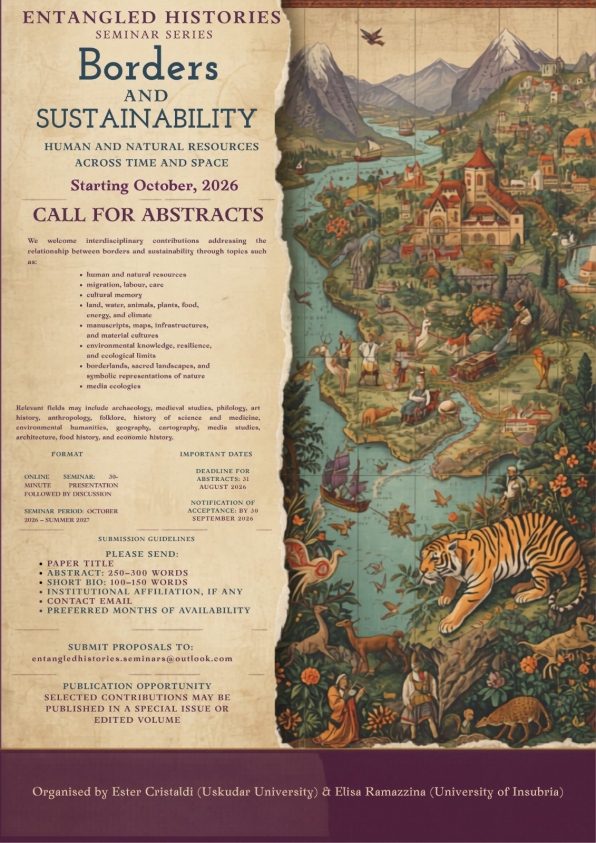
CFP - Borders and Sustainability: Human and Natural Resources across Time and Space (Seminar Series 2026–2027)

Call for Papers: Entangled Histories Seminar Series 2026–2027

Following the success of the current edition, the Entangled Histories Seminar Series invites abstracts for its 2026–2027 cycle: 

"Borders and Sustainability: Human and Natural Resources across Time and Space."

This edition explores sustainability not as an exclusively environmental concern but as a multifaceted concept that intersects with borders across diverse cultural, material, and ecological contexts. 

The series adopts a diachronic and interdisciplinary perspective, spanning from prehistory to the contemporary world.

Sustainability and Borders: A Broad Perspective. We seek to investigate sustainability in its multiple dimensions:

  • Material sustainability: recycling of resources (manuscripts, architectural structures, waste, and landscapes).
  • Ecological sustainability: relationships between humans, animals, and environments; balance between preservation and exploitation.
  • Social, linguistic, and cultural sustainability: transmission of knowledge, endangered languages, healing practices, migration, and community resilience.
  • Symbolic sustainability: representations of ecological limits, hybrid beings, and cultural imaginaries of nature and borders.

Conceptual Framework At the heart of the series lies the concept of borders, understood as dynamic thresholds that shape access to resources and regulate interactions. Borders are not only physical or political: they can be ecological, cultural, social, linguistic, political and material. While we encourage long-term temporalities and global spatial entanglements, we also offer the elements (earth, water, air, fire, ether, wood, etc.) as a possible heuristic framework to explore these dimensions across different historical strata.

Topics of Interest: We encourage contributions from a wide range of disciplines, including but not limited to:

  • Archaeology and Prehistory: Resource use, landscapes, indigenous practices, and environmental interactions over time.
  • Medieval Studies, Philology, and Manuscript Cultures: Material sustainability of manuscripts, palimpsests, intellectual ecologies, literatures and languages, and the transmission of knowledge.
  • Art History and Visual Culture: Representations of nature, landscapes, borders, and material practices across different periods.
  • Anthropology and Folklore: Vernacular ecological knowledge, oral traditions, liminal beings, and environmental imaginaries.
  • History of Science and Medicine: Healing practices, scientific knowledge, and environmental understanding across cultures.
  • Environmental Humanities and Ecology: Human–non-human relations, ecosystems, climate, and resilience.
  • History of Economy, Trade, and Food Systems: Circulation of resources, subsistence, scarcity, and sustainability practices.
  • Architecture and Infrastructure Studies: Built environments, water and soil management, roads, and material borders.
  • Geography, Cartography, and Media Studies: Spatial representation, mapping, and communication of environmental knowledge across borders.

? High-Impact Publication Opportunity: A selection of the most significant contributions will be published in a dedicated edited volume or a special issue with a leading international publisher (past collaborations and ongoing projects include prestigious venues such as Brill, De Gruyter, and Routledge). This ensures that the research presented reaches a global audience of specialists.

Submission Guidelines

  • Format: Online seminar (approximately 30-minute talk + discussion).
  • Schedule: October 2026 – Summer 2027.
  • Required: Title, Abstract (250–300 words), Short Bio (100–150 words), Affiliation, email address, and preferred months of availability.
  • Deadline: 31 August 2026.
  • Send to: This email address is being protected from spambots. You need JavaScript enabled to view it..
Read more...
Subscribe to this RSS feed

About REPORT(H)A

News & Events